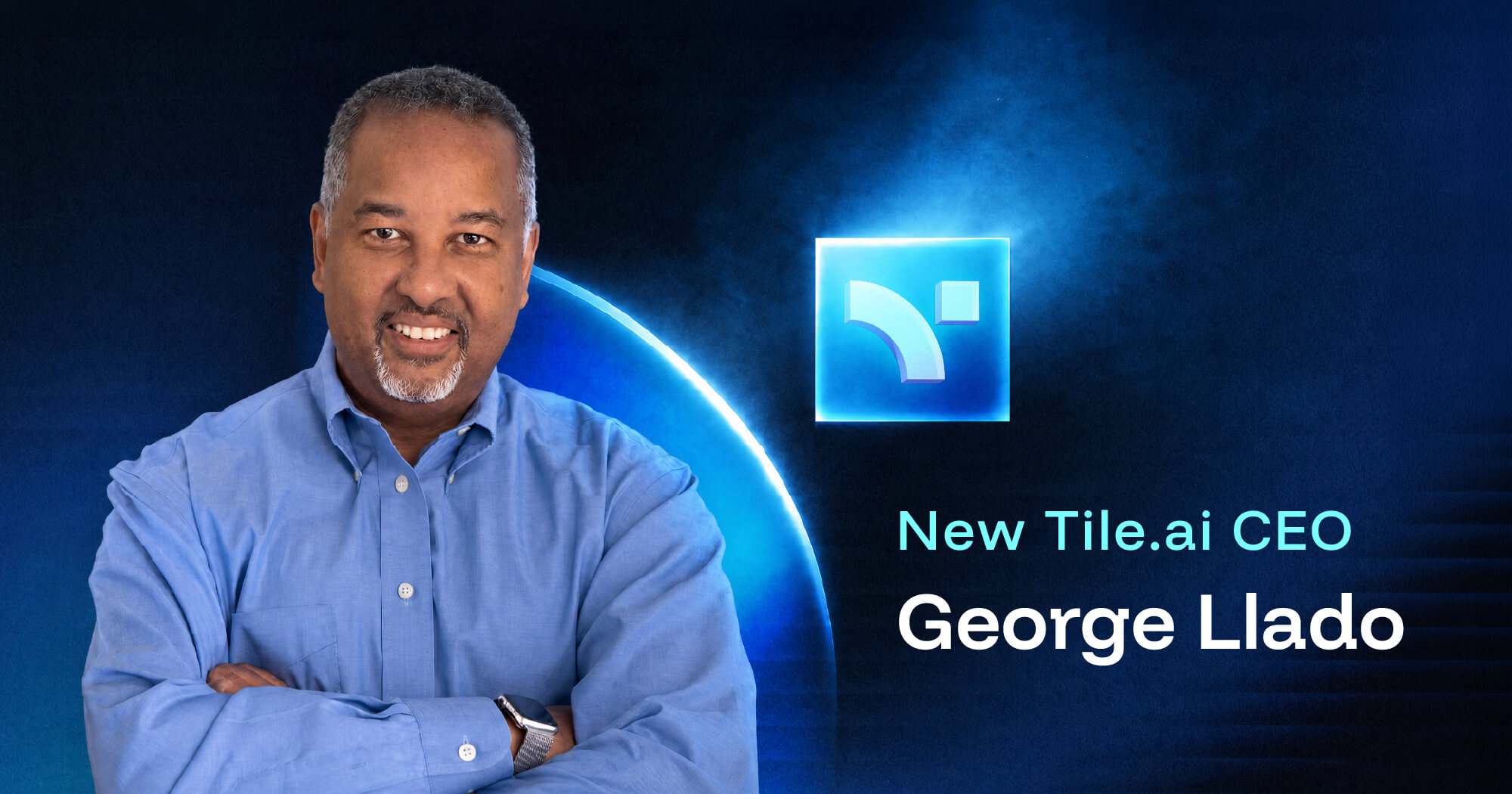
Why I joined Tile.ai as CEO

When I retired from Alexion in 2022 after 33 years in enterprise IT — as CIO at Merck and then Alexion — I genuinely believed my chapter with biopharma was closed. I was enjoying board roles, spending time with my grandchildren, and watching the industry from a comfortable distance.
Then AI happened. And it surfaced the hardest, most intriguing problem of my entire career — one I’d been circling for three decades without ever fully solving, and I saw it clear as day.
Every wave promised to fix it. ERP gave us “ground truth.” E-commerce gave us “data interchange.” Mobile gave us “real-time access,” social promised to capture our “tacit knowledge,” the cloud told us to “be elastic.” We assembled our data into lakes, and the lakes became swamps. Every promise broke against the same wall: data usability. We spent many millions on platforms and tools, but the underlying data stayed messy, fragmented, and siloed. We moved fast and kicked the hard work down the road. Every time.
A similar thing is happening today with AI. At this moment, AI models themselves are becoming commodities. How enterprises use the models rests on how usable and reachable their data is. Enterprise-grade applications that package models are proliferating, and yet each one is creating a silo again.
I’ve watched this pattern repeat with Windows File Manager, Box, SharePoint — all of them. Day one, they were transformative. Down the road, they became unmanageable, and I was the CIO getting the angry phone calls.
The real moat for any enterprise isn’t which model it runs. It’s the way enterprise data is put in front of those models — discoverable, accessible, and governed.
Three years ago, I joined TileDB’s board. When Stavros, the founder, walked me through his vision for TileDB’s new product, Tile.ai, something clicked immediately. This wasn’t a database at all. The vision for Tile.ai instead was that of a substrate — a foundational AI infrastructure stack built to solve the exact problem I’d spent my career fighting.
Two things convinced me to step off the sidelines and come back as CEO:
No Byte Moved. Every major project I ran required months of data movement and cleanup before the real work could even begin. Tile.ai meets your data exactly where it lives — making it AI-ready while keeping security and governance completely intact. No migrations. No compromises.
The “Tile” Primitive. It’s governance over data that never moves, carrying what the data is, the tools to work it, and who has access — human or machine — built in by default, not bolted on. It turns messy, sprawling infrastructure into an organized, accountable asset. The clearest differentiator of them all.
The no-data-movement got my attention; the Tile is what convinced me there was a real company here.
Experience tells me to embrace the raw power of foundation models — and I do. But the models alone won’t differentiate the enterprise. That takes a new choreography of humans and machines, served by the substrate of data on which every decision rests — orchestration and governance across the full complexity of the data landscape, from the simple table to the complex multi-dimensional array. This is Tile.ai.
It’s also our company’s new brand as of today, TileDB becomes Tile.ai — and what we’re building is the Enterprise AI Data Substrate: a single layer that makes all enterprise data ready for AI, wherever it lives. Without moving a byte.
I am stepping in as CEO to close the gap between the ambition of artificial intelligence and its reality — and I couldn’t be more excited about what the future holds.